



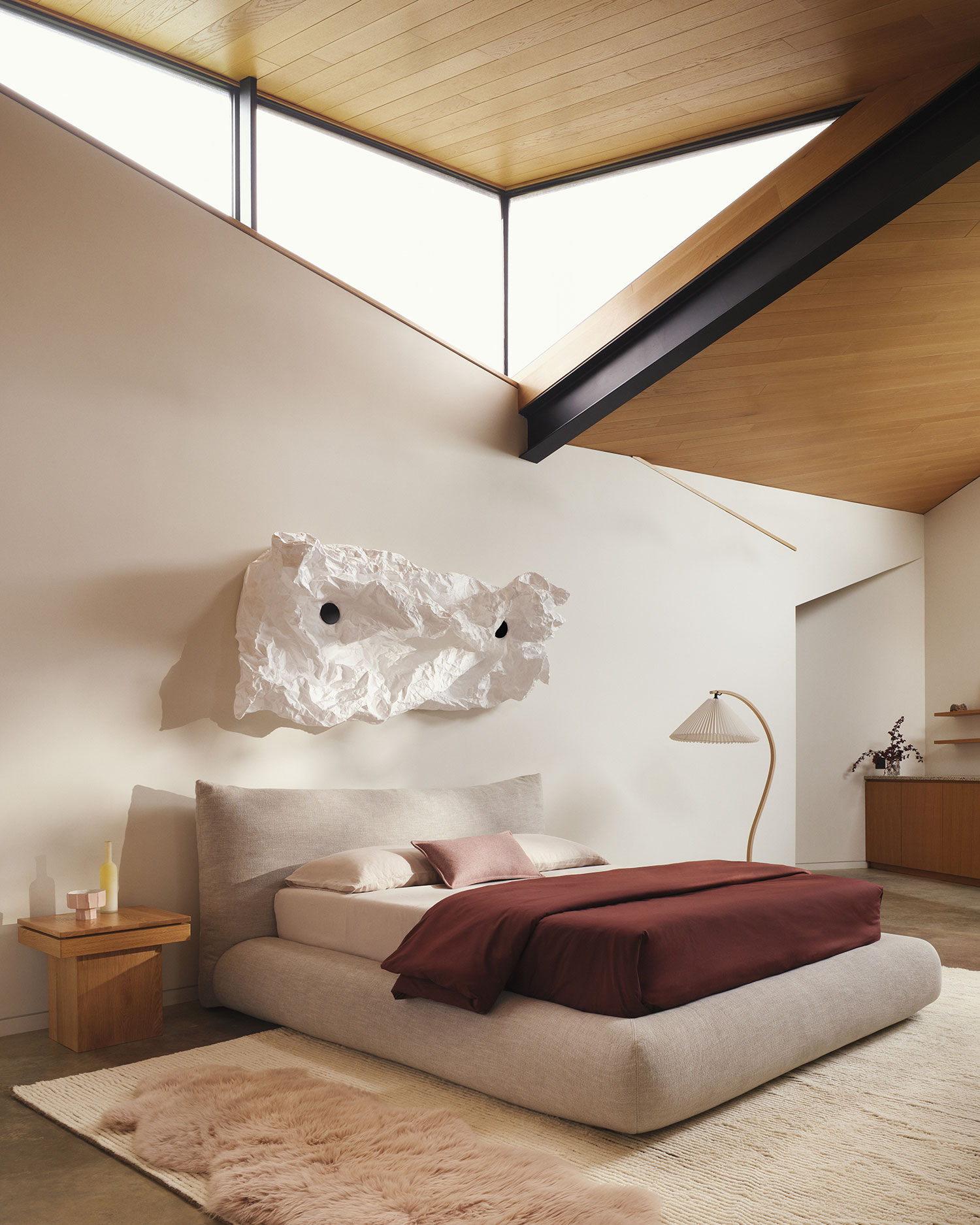
Soft linens, warm wood tones, and a skylight-lit ceiling give this bedroom its modernist ease. Photo courtesy Design Within Reach
On what he describes as a dark and stormy night in January of 2007, George Smart sat down at his computer to look for a lot to build a house on. What he found instead was a graveyard.
Scrolling through what remained of Raleigh’s postwar architecture, he kept coming across houses he’d never seen before. Some were already torn down, while others were clearly headed there. George grew up in this city. His father was an architect. He’d thought he knew all the important places. He didn’t.
So George started a list on a yellow legal pad. It reached 50 entries before he showed it to a few of his late father’s friends, retired architects who took one look and said there were hundreds more. If George came to pick them up, they offered to show him where. For the next several months, George drove 80-year-old architects around Raleigh in his Mini Cooper, “like The Italian Job,” he says, chasing down houses most of the city had forgotten it still had.
Nineteen years later, that legal pad has grown into a three-part story about how Raleigh fell for modernism and decided to keep it. This year alone, the movement has a new address, a wider audience, and a bus.
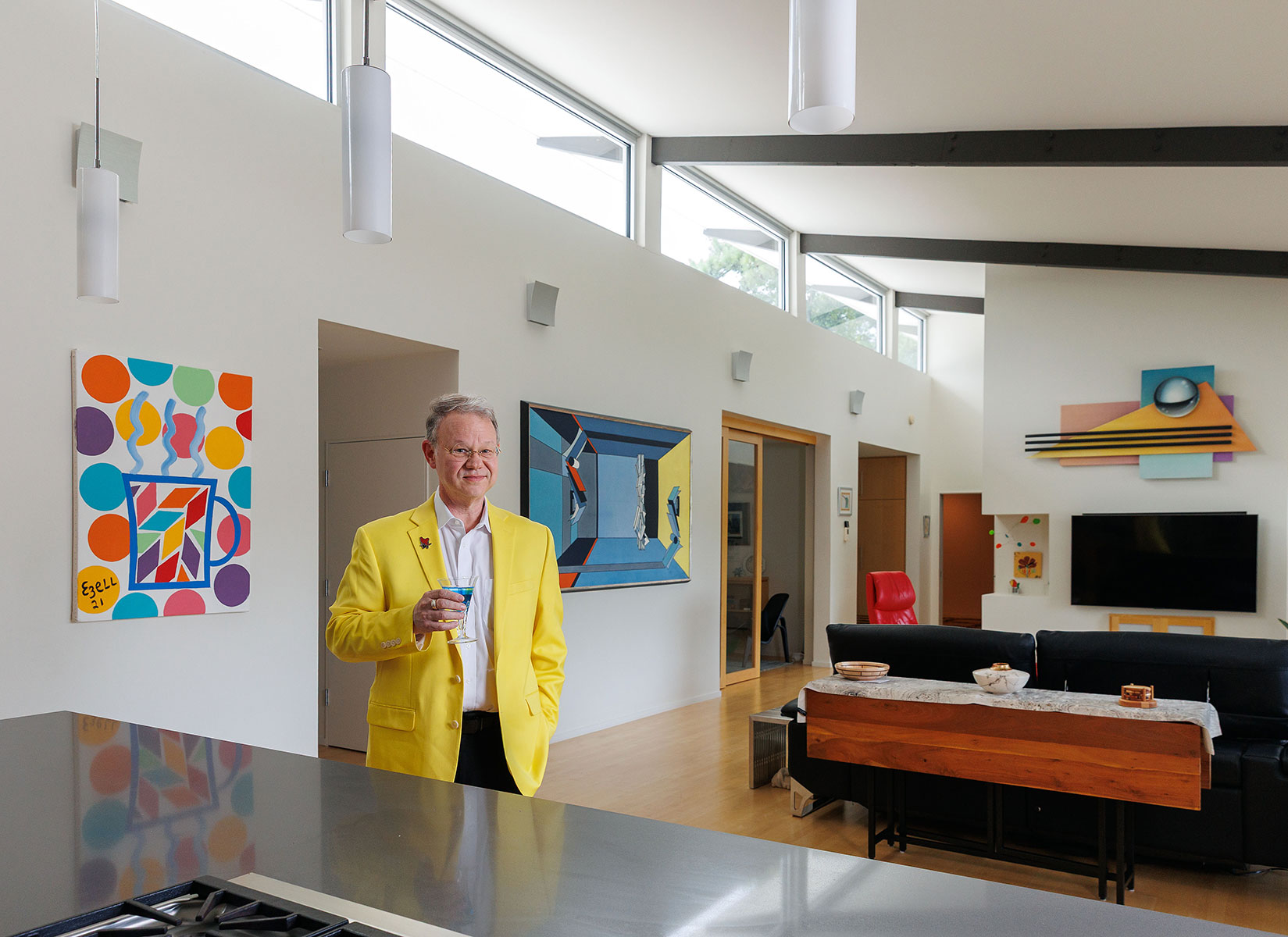
George Smart in his Durham home. Photo by Jonathan Fredin
In August, modernist retailer Design Within Reach opened its second North Carolina showroom in North Hills. In September, NCModernist, the nonprofit George founded, sends its Modapalooza tour through the Triangle for a 13th year. And behind both is George’s own quieter project: a 6,000-house archive built to make sure Raleigh never again mistakes what it has for something ordinary.
Design Within Raleigh’s Reach
The state’s first Design Within Reach (DWR) location, Charlotte’s South End store, opened in June 2019. The Raleigh shop followed seven years later, on August 21 of this year.
Seven years is a long gap between a first store and a second, but Raleigh had been on the radar the whole time, says Debbie Propst, president of global retail for MillerKnoll, DWR’s parent company. “Raleigh has been a market of interest for several years due to its population growth, strong design culture, and increasing customer engagement with the brand,” Debbie says. “When the opportunity to establish a presence at North Hills arose, we saw a unique combination of location, audience, and timing that made it the ideal moment to bring DWR to the Triangle region.”
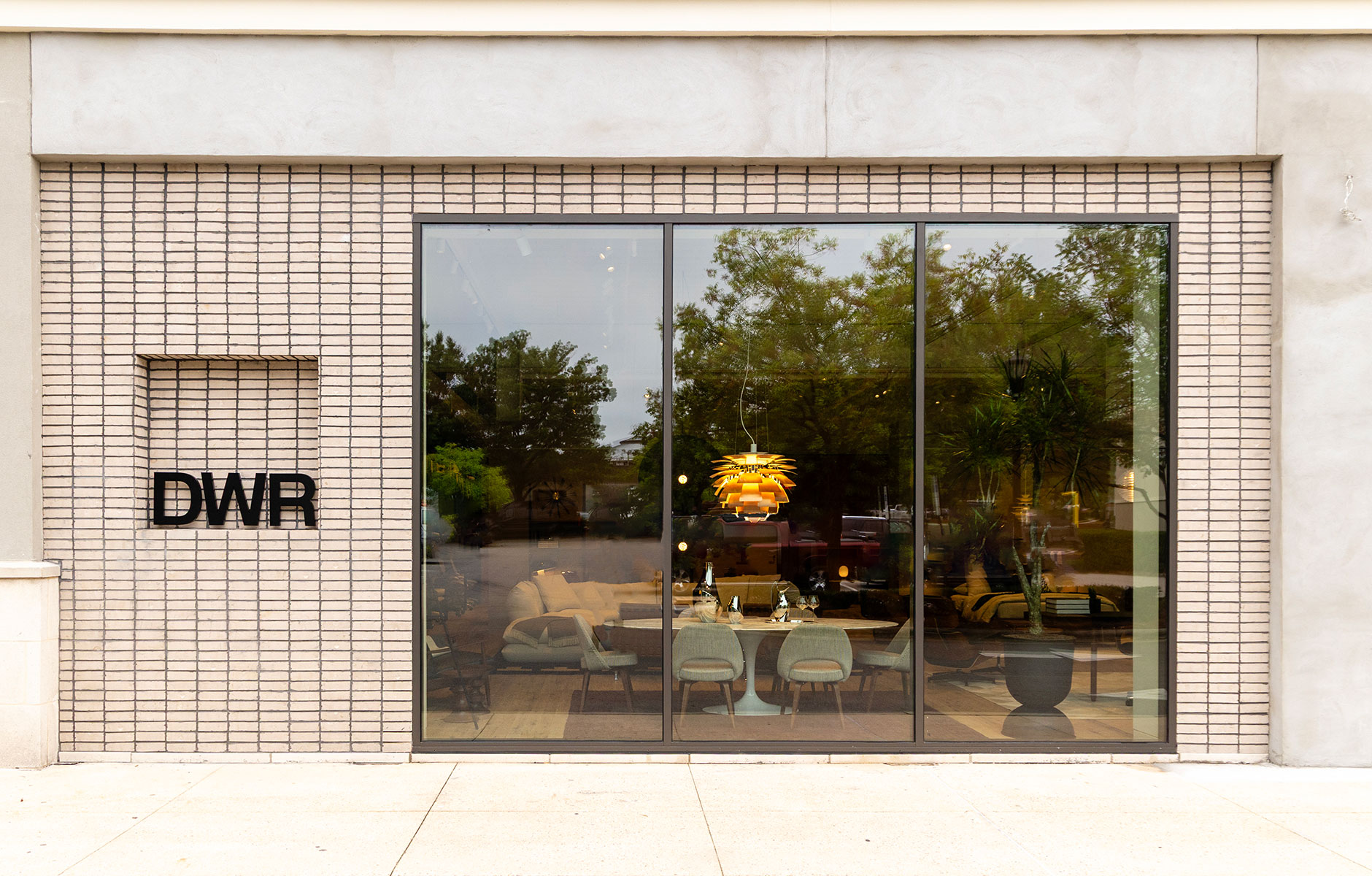
Floor-to-ceiling windows, reclaimed oak, custom millwork, and locally sourced recycled brick fill DWR’s 4,790-square-foot North Hills showroom. Photo by Erin Bell, Bull City Photography
The 4,790-square-foot showroom is built from reclaimed oak flooring, custom oak millwork, and 100% recycled pale brick sourced within state, with floor-to-ceiling windows pulling in natural light. This nod, deliberate or not, is to the very houses George has spent two decades documenting. That local sourcing wasn’t incidental, Debbie acknowledges: “Over the past few years, as part of the continued evolution of DWR, we have made a concerted effort to develop each of our stores through a localized lens. The architecture of the space and the design choices we made were influenced by the region.”
Inside, the shelves read like a modernist syllabus. The Eames Lounge Chair and Ottoman, the Womb Chair, the Artichoke Pendant, the Wishbone Chair, alongside contemporary work from Herman Miller, Knoll, Louis Poulsen, Fritz Hansen, Flos, GUBI, and Carl Hansen & Søn. A design services team offers space planning and 3D renderings free of charge for anyone who wants professional help getting the look right.
“Our decision to expand into Raleigh was driven by the region’s remarkable connection to design,” Debbie says. “Few places have contributed more to the story of American modernism and furniture-making than North Carolina. From its world-class design schools and architectural legacy to its culture of craftsmanship and innovation, Raleigh is a community that deeply values the kind of authentic, enduring design that DWR represents.”
It’s not just design pedigree driving the decision, either. North Carolina has long been the nation’s furniture-manufacturing capital, centered an hour west in High Point where a deep bench of local makers can build the things designers imagine. Layer in Raleigh’s place inside the fast-growing Research Triangle, and DWR’s bet on this region looks less like an experiment than math long overdue.
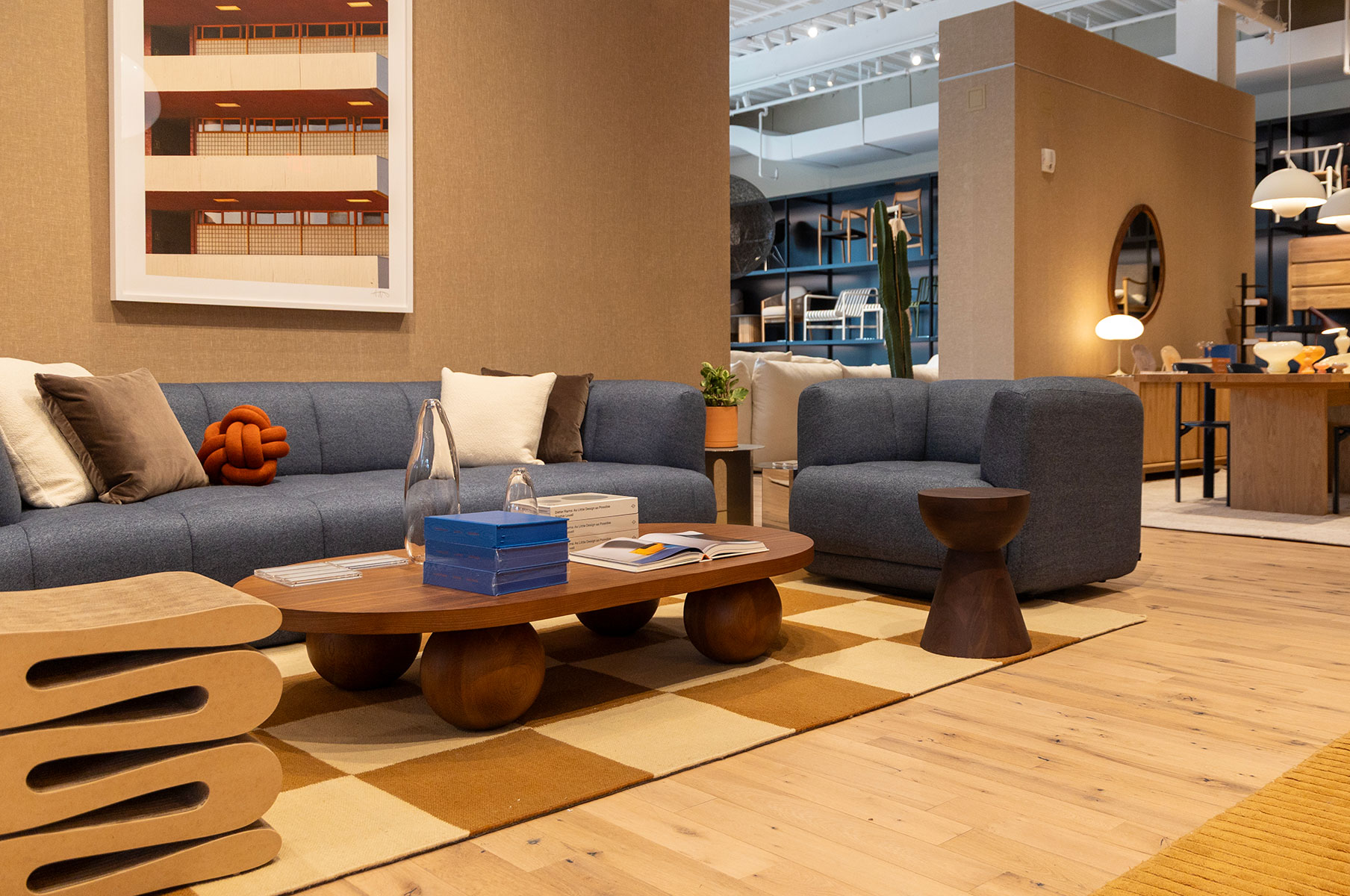
Photo by Erin Bell, Bull City Photography
That legacy has a specific address as a classroom and not a factory floor. In 1948, NC State recruited a young dean named Henry Kamphoefner away from the University of Oklahoma to build what would become the School of Design. “It changed everything about all buildings, really,” George says. Before Kamphoefner arrived, NC State’s architecture program was, in George’s telling, a fairly conventional engineering track. Kamphoefner did things deans don’t get away with today by firing much of the existing faculty and recruiting students and instructors from design programs around the country in a push to make the school the nation’s leading center for modernism.
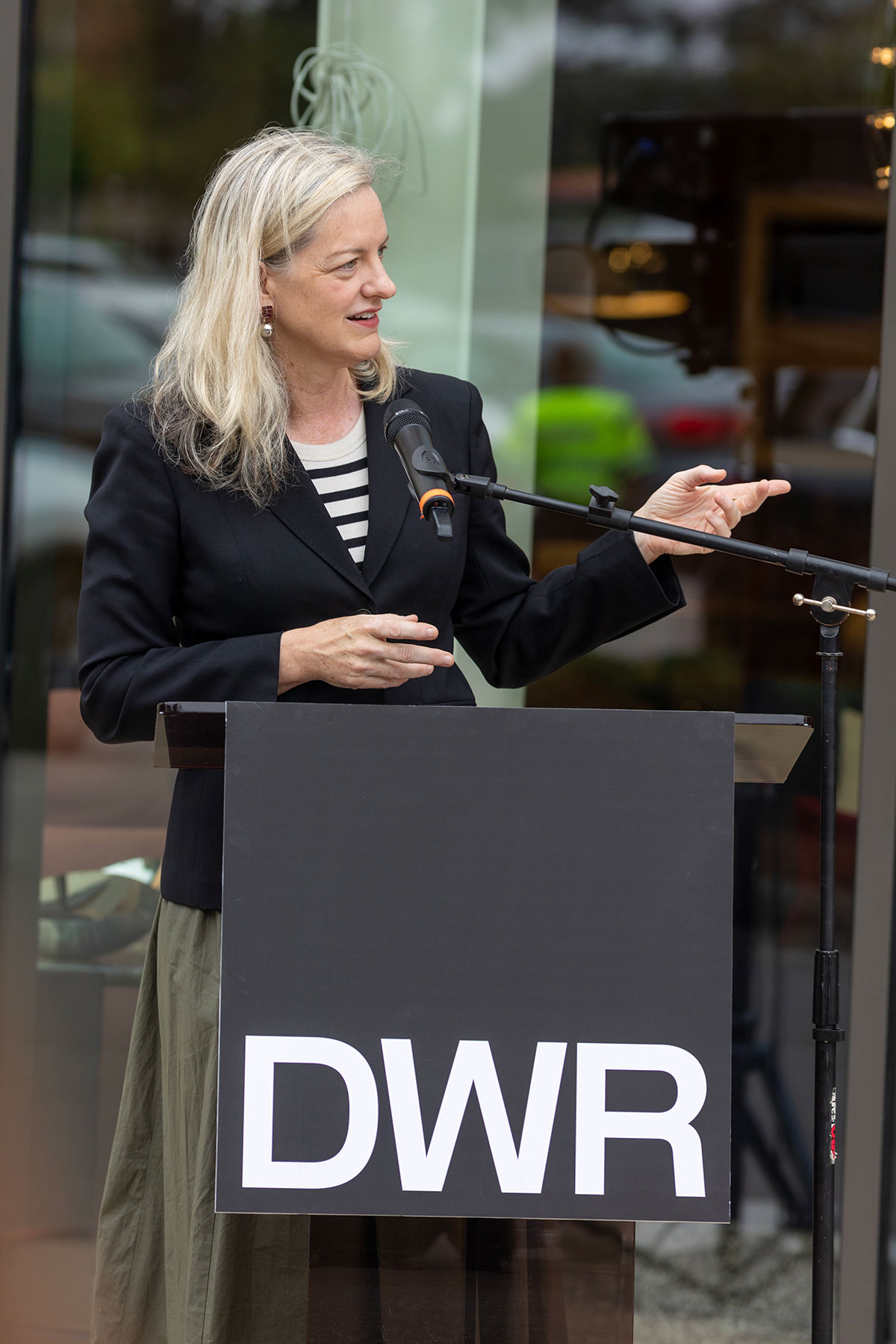
Raleigh Mayor Janet Cowell speaks at the opening of Design Within Reach on August 21, 2026. Photo by Erin Bell, Bull City Photography
Two years later, in May 1950, Frank Lloyd Wright came to Raleigh to lecture in the newly built Reynolds Coliseum, drawing what George calls the largest architecture audience in the world at the time, 5,000 in attendance, in a city of roughly 70,000 people. Kamphoefner stayed dean for 25 years. His faculty lectured alongside Marcel Breuer, Mies van der Rohe, Charles Eames, and Eero Saarinen, and his graduates went on to design schools, hospitals, post offices, office buildings, and churches across the state, which is why Raleigh’s modernist inventory runs so much deeper than most cities its size.
Ask Debbie how much that specific history factored into DWR’s decision, versus standard retail metrics like population growth or household income, and she describes it as inseparable rather than either-or. “The region’s design legacy was absolutely an important factor, but it wasn’t an either-or decision between culture and retail fundamentals,” she says. “We look for markets where strong customer demand intersects with a meaningful connection to design, and Raleigh offered both. From a business perspective, the Triangle’s continued growth and strong engagement with the DWR brand made it an attractive market. At the same time, Raleigh has a unique place in the history of modern design. The influence of Henry Kamphoefner and NC State’s School of Design helped establish a culture that embraces modernism, creativity, and thoughtful design — values that align closely with DWR’s heritage.”
The Archivist
George’s list didn’t stay a list for long. In 2007 it became Triangle Modernist and covered Raleigh, Durham, and Chapel Hill. The organization went statewide in 2013 and national in 2015, rebranding as NCModernist. It is now the state’s largest open digital archive, with more than 6,000 North Carolina houses catalogued and roughly 25,000 nationwide on its sister site, USModernist. George runs it all using his background as a management consultant specializing in strategic planning and executive development.
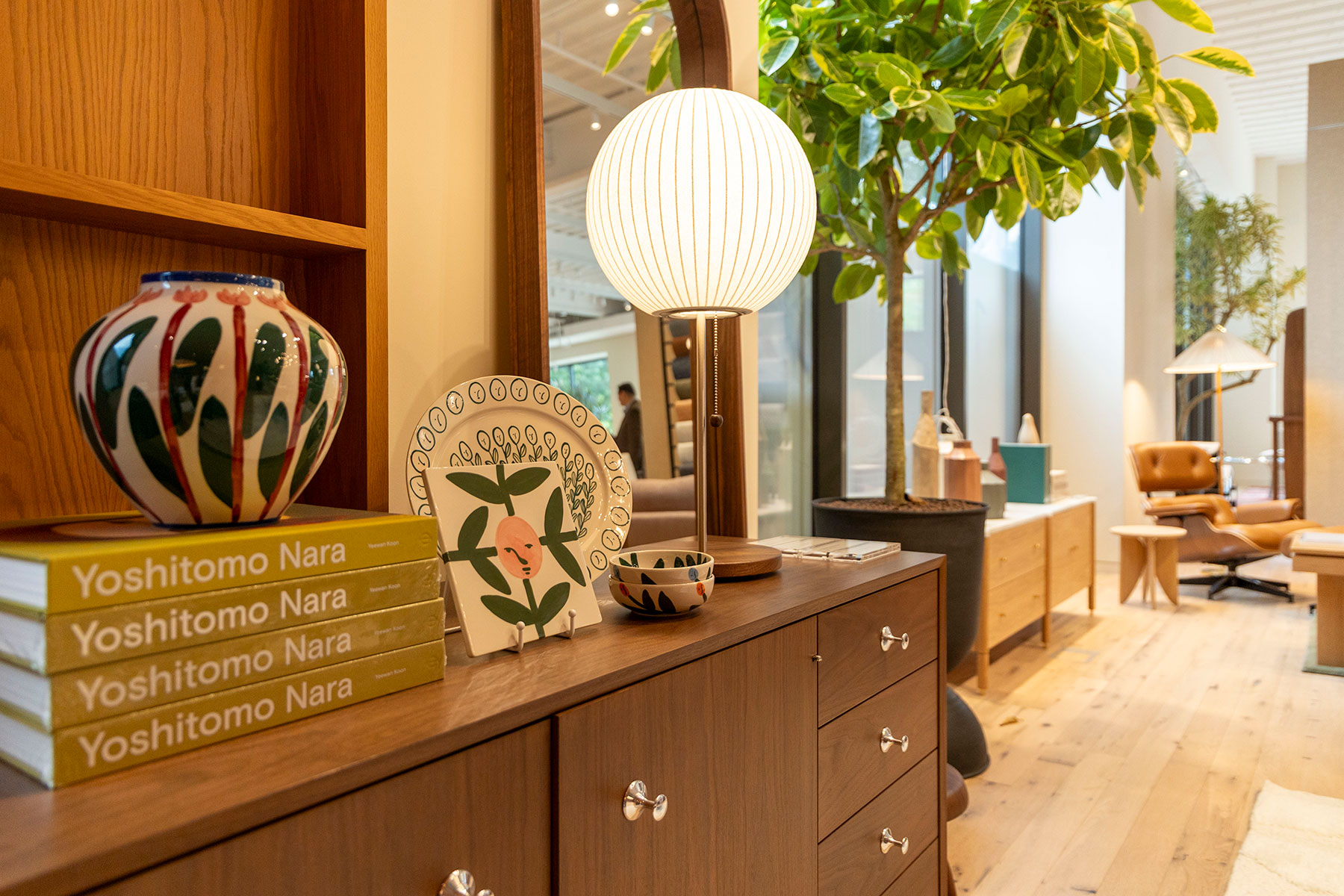
Photo by Erin Bell, Bull City Photography
“This is not a job for an architect,” he says. “Architects are here to design things. We’re not designing anything. We’re running an organization for fans of architecture and a documentation operation for the history of architecture.”
What’s at stake, George says, is simpler than architectural theory. “The community is losing art that is livable.” Not every house is worth saving, he adds. “Many that were intricately designed have a much longer life than people think.” He explains that “they can be restored and live on for another 50 years.”
The way these houses are usually lost follows a pattern. A husband and wife raise a family in a midcentury house; both parents eventually pass, and their children inherit it. “Usually one of them wants to save the house,” George says, “and the other two just want to sell the property and don’t really care what happens to it.” The house sells, gets torn down, and something not better goes up in its place.
The other common path runs through well-meaning renovation: An owner hires a general contractor without modernist experience — “their cousin Earl,” a deadpan George says — who advises against fixing the place up on the theory that the money won’t be recouped. Often, he says, that advice is simply wrong, delivered by someone who’s never worked with an architect who understands how these houses handle space.
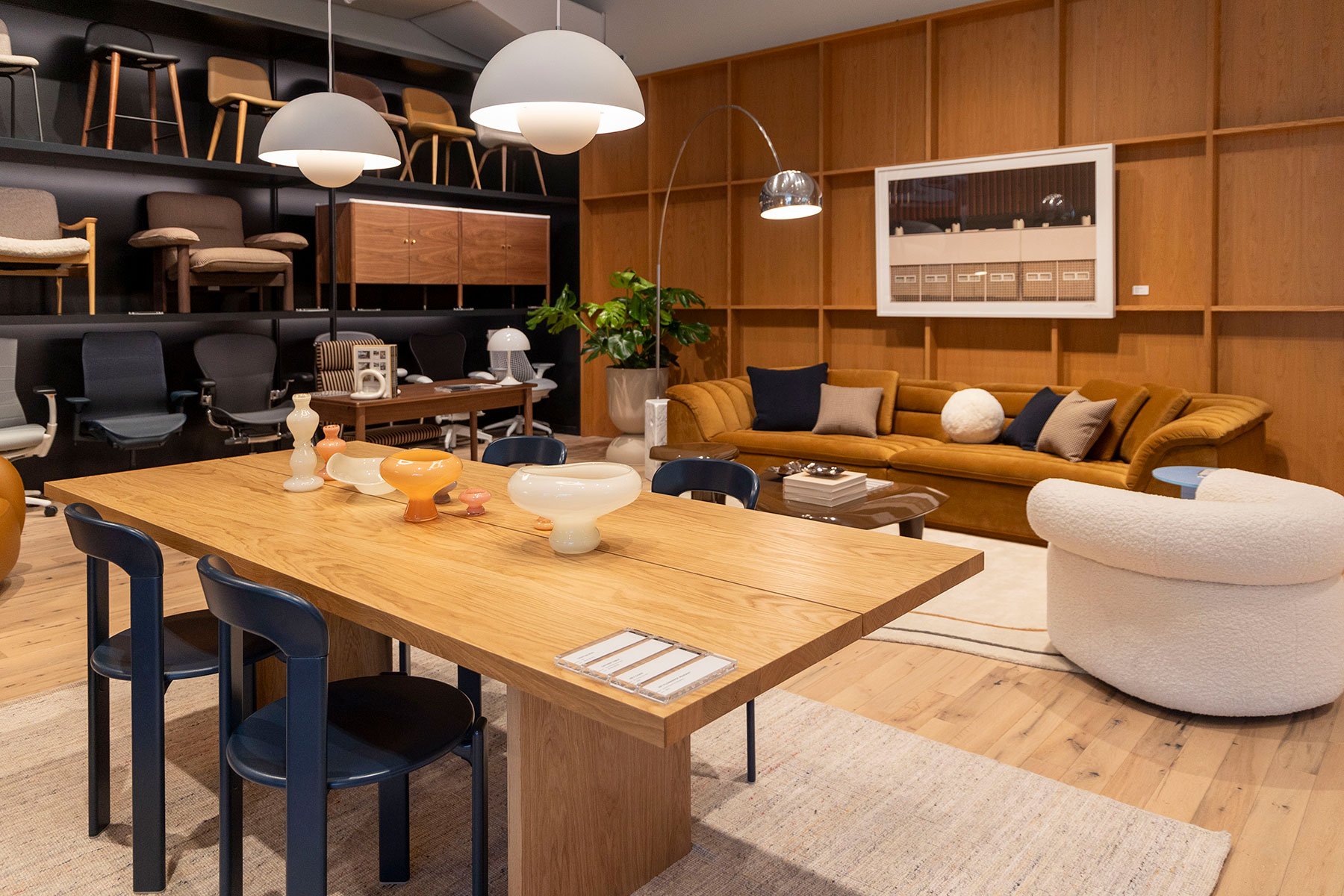
Photo by Erin Bell, Bull City Photography
The house that still haunts George is the Catalano House, a 1954 hyperbolic paraboloid structure of just 1,700 square feet that was, for decades, the second-most-famous house in the state after Biltmore and was recognized by architects around the world. Its last owner, an attorney, moved out after waking to find a snake inside. The house then sat empty until a roofing contractor working on repairs cut a key support cable and the roof began to collapse. The house was eventually sold and demolished. A pair of McMansions stands on the site now.
Loss like that is why NCModernist exists, but so is rescue. The organization has helped roughly 500 houses change hands by building the first listing service specifically for modernist real estate. Until approximately a decade ago, George says, the multiple listing service had no modernist category at all — only a catch-all called “contemporary” that “could be anything: a yurt, an igloo, a modernist house.”
Vacancy, he says, remains the single biggest threat a house can face. An empty house isn’t monitored, and no one notices a leak, a break-in, or a squatter until real damage is done. George’s advice to families with an inherited house that’s sitting empty is to get someone living in it, rent-free if necessary, just to keep the lights on and the mail collected.
For houses worth extra protection, NCModernist points owners toward two legal tools. A deed restriction is, in George’s words, “a temporary homeowners association for one house”: a one-page filing that blocks demolition for a set number of years and must be disclosed to any buyer. A preservation easement goes further, protecting specific architectural features, like a signature fireplace or original roofline, permanently.
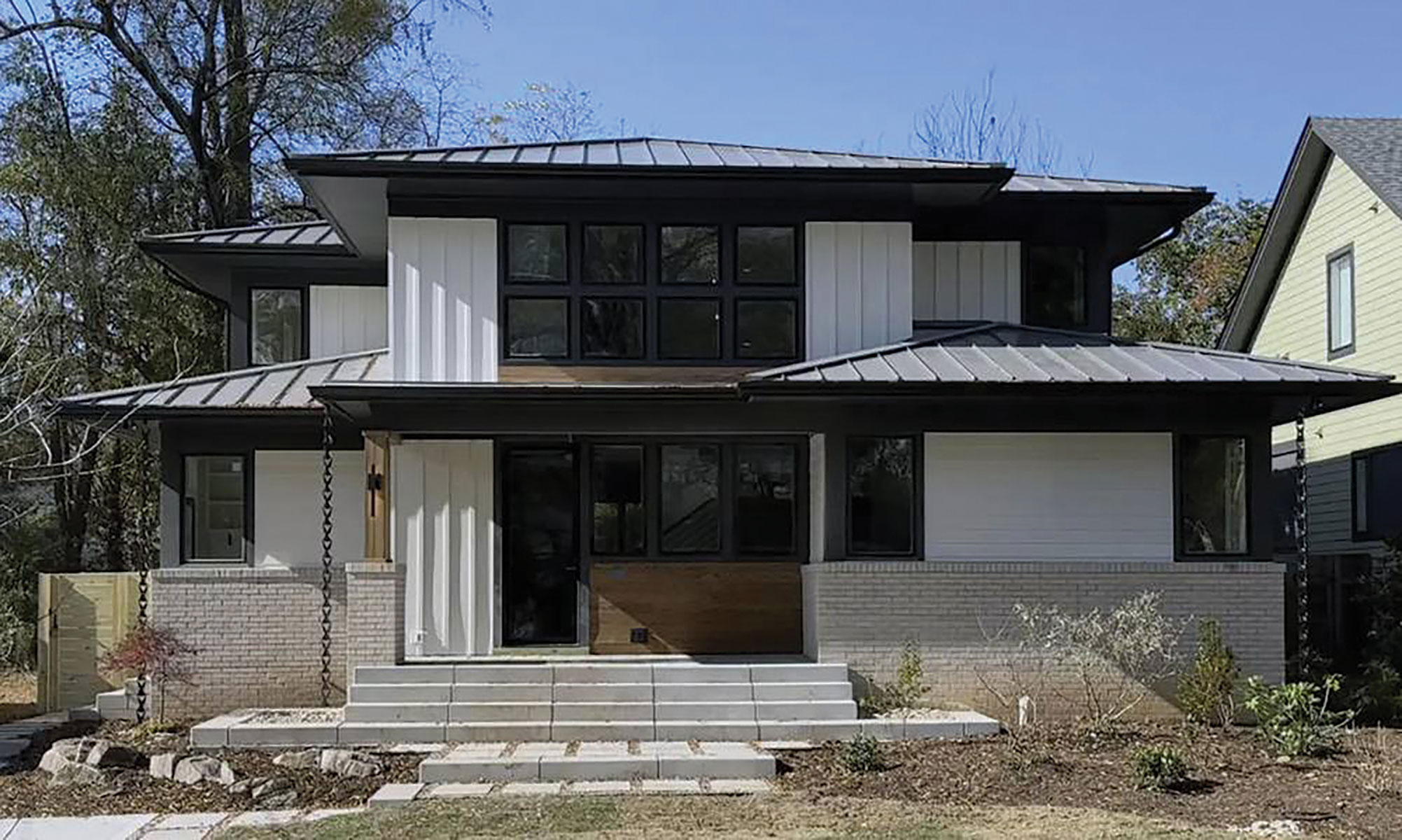
The Fowler House — Chad Wilkins, 2026. Modapalooza’s newest stop is proof that modernism doesn’t have to look like 1950 to count. Photo courtesy NCModernist
Ask George whether the answer is new legislation or a broader cultural campaign, and he demurs. The tools that already exist work, he says, when people know to use them. “If we didn’t exist, there’d be many more teardowns. This is what happens all over the country: A weird old house at the end of the street, nobody knows anything about it. The last owner passes away. It gets sold. It gets torn down. It’s gone. …”
Zoom out far enough and the story of these houses is the story of a single idea that boomed, went out of style, and then came back again. Modernism traces to around 1915 on the West Coast, gaining momentum as immigrant German and Austrian architects brought Bauhaus thinking with them. Its real boom years ran from 1945 to 1970, driven by the postwar need for housing. Then it crashed due to an oil crisis and the fact that material science hadn’t caught up with design ambition.
Flat roofs leaked. “The word on the street became ‘Don’t buy a flat-roofed house,’” George says. It took 20 years and the arrival of computer-aided design for materials, and taste, to catch back up. This revival started in the late 1990s and, he says, “has really not stopped since.” What keeps people restoring these houses today isn’t nostalgia, in George’s telling, so much as how well they still function. “They were working on being green before that was even a phrase,” he says.
Yet even at its most popular, modernism has never been anything but a sliver of the market. George estimates it at roughly one-fourth of one percent of North Carolina’s housing stock. What defines that sliver comes down to four features: a flat or low-pitched roof; an abundance of openings (windows, courtyards, atriums, skylights, big sliding glass doors) that pull the outdoors in; an unusual geometry; and an open floor plan, only possible when central heating and air meant houses no longer had to be chopped into small, separate rooms. “Back in the day, open floor plans were like the Bitcoin of their era,” George says, “so new and different and unusual.”
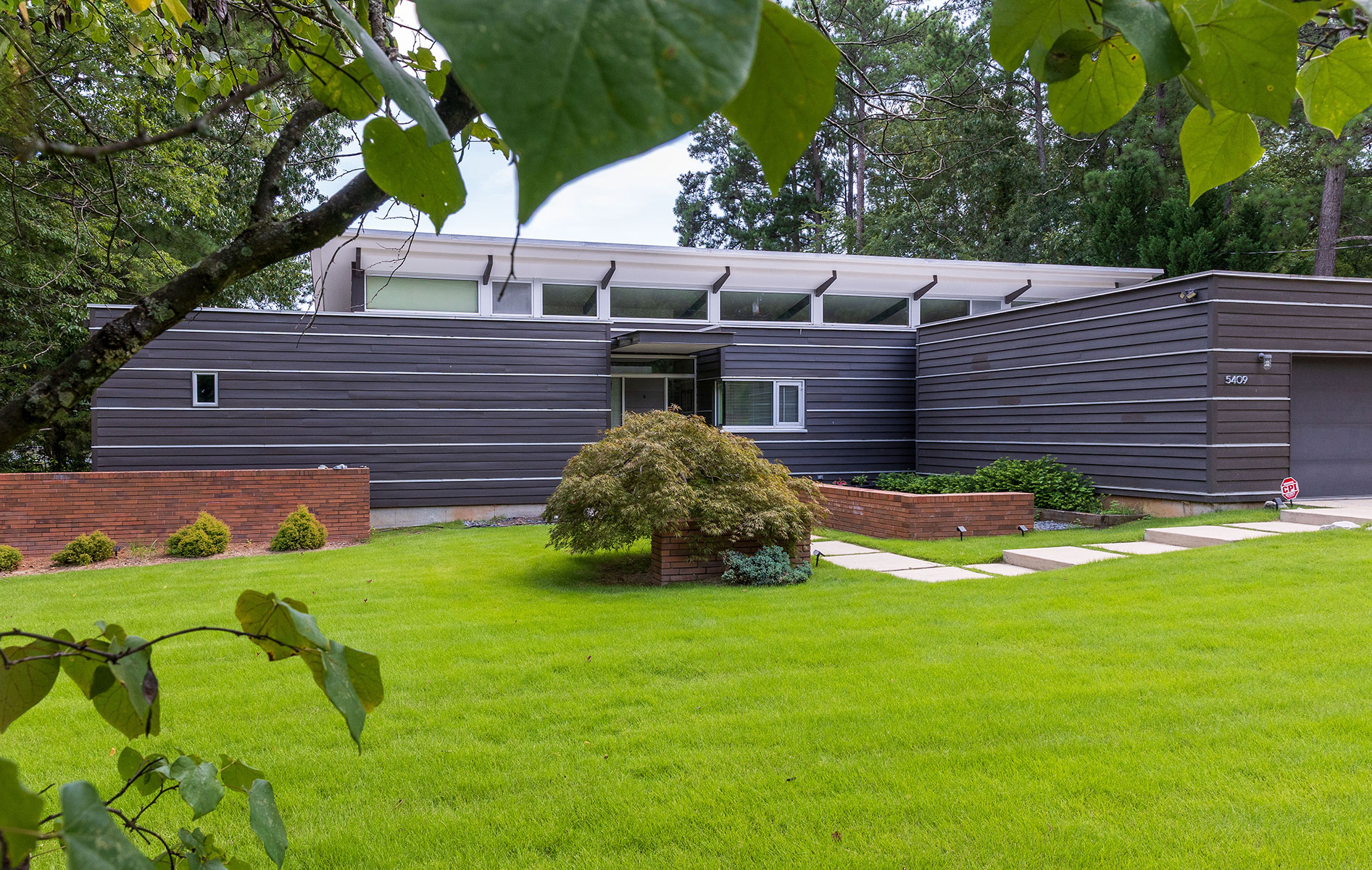
Photo by Jonathan Fredin
Most of what NCModernist spends its year encouraging, beyond the archive, is its 30-plus annual events. Built on the theory that people don’t want an architecture lecture — “That’s for architecture students,” George says — they want to experience the buildings themselves, whether that’s a house tour, a movie night, or a martini in a striking living room. It’s programming built for converts and skeptics alike, which matters a lot every spring and fall, when the archive rolls out of the browser and onto a bus.
Mod on the Move

Twice a year for the past 13 years, NCModernist has turned its archive into a field trip. Modapalooza tours load ticket holders onto buses in Research Triangle Park and spend a day visiting private homes. This fall’s tour, on September 26, stops at eight houses and a farm across Raleigh, Durham, and Chapel Hill. Four of the stops sit within Wake County.
The lineup mixes new construction with midcentury landmarks: Lightwell II in Chapel Hill (Kata Walters, 2026); The Hughes House in Chapel Hill (Arielle Condoret Schechter, 2026); Dover Road House in Durham (Szostak Design/Phil Szostak, 2024); Von Mod in Durham (Distinctive Architecture/Bill Waddell, 2025); Robert Carr House II in Durham (Robert Carr, 1952); The Fowler House in Raleigh (Chad Wilkins, 2026); The Fadum House in Raleigh (James Fitzgibbon, with a later addition by Brian Shawcroft, 1950); Burkett Farm in Raleigh (REdesign/Will Alphin, 2024); and Umstead Park House in Raleigh (ThoughCraft/Jason Hart, 2026). Ticket holders, many of whom get to meet the architects in person, pay $159 to $179 for a full day that includes coffee, lunch, a tote bag and, notably, an air-conditioned, restroom-equipped bus.
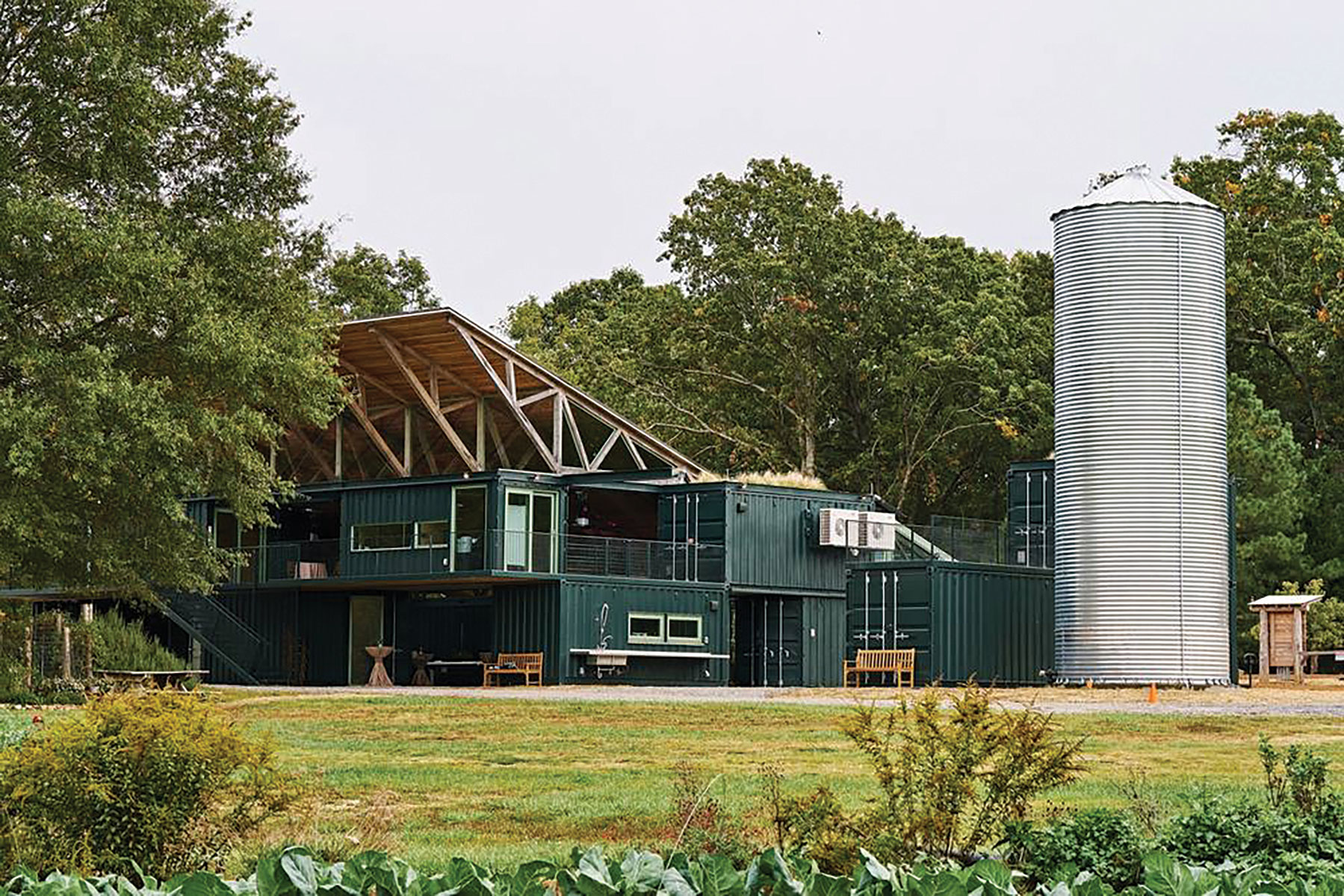
Burkett Farm — REdesign/Will Alphin, 2024. The stops on Modapalooza’s September 26 tour are mostly houses, but this one is a working farm that was founded in 2014 as a modest vegetable garden that donated its harvest to local food banks before growing into a hub for regenerative agriculture. Photo courtesy NCModernist
Much of the tour showcases new houses on purpose. “All of modernism was originally designed to be affordable for everybody, postwar,” George says. “You can take a modernist design and really bling it out and spend a lot of money — but you don’t have to.” He points to the efficiency baked into good architectural planning, where a house someone assumes needs 3,200 square feet might live just as large at 2,600, once an architect who understands space gets involved. “That’s 600 square feet you didn’t have to pay for,” George explains.
He doesn’t have a personal favorite stop on the tour; he’s just glad to get people into houses they’d otherwise never see, some tucked down driveways most residents pass without a second look. A fair number of ticket holders come as reluctant pairs, one partner a devoted modernist and the other skeptical. “This is a propaganda trip for the modernist fan, to persuade the other one,” he says, “and it frequently works, because the people who dislike modernism the most generally haven’t been inside the houses.” More than a few architects on the tour have picked up new clients by the end of the day — proof, George says, that the movement keeps feeding itself.
Modapalooza’s growth from a passion project into a waitlisted annual event is the clearest evidence of the shift DWR is now betting on. “When we started this, I hoped a few dozen people would come,” George has previously said. “Now it’s a phenomenon comprised of eight houses, a full fleet of buses, and a waiting list.” This fall’s tour is sponsored by Anderson Pope of Northern South, Pella, and Anna Hartwell of Hartwell Financial Group. Tickets and details are available at ncmodernist.org/palooza.
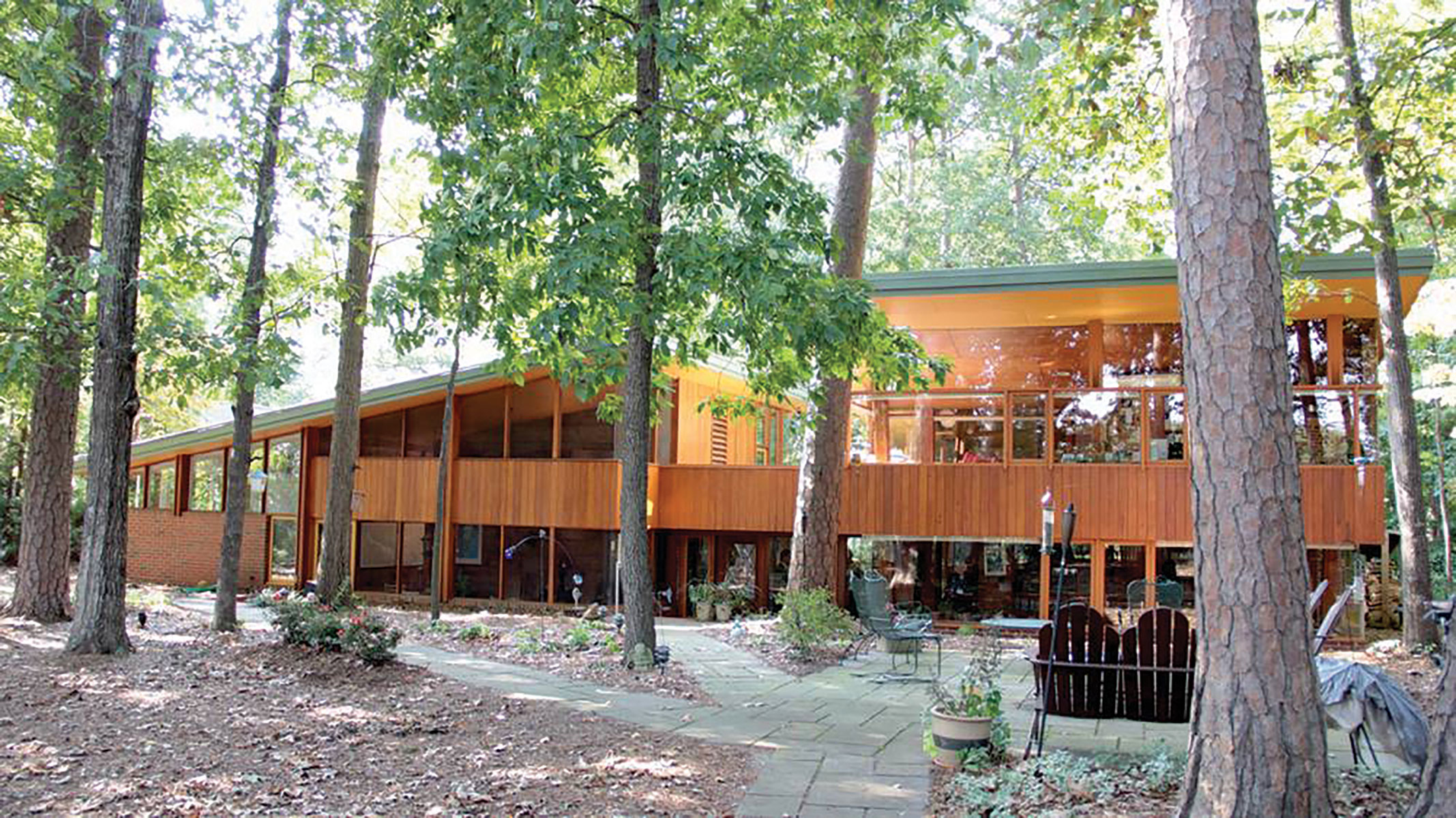
The Fadum House — James Fitzgibbon, 1950, with a later addition by Brian Shawcroft. The oldest stop on this fall’s Modapalooza tour is tucked into a wooded Raleigh lot with the low-pitched roofline, deep eaves, and walls of glass that define modernist style. Photo courtesy NCModernist
Nearly two decades after that yellow legal pad, George still tells people the fastest way in doesn’t require a ticket at all. Get on the NCModernist newsletter, he says, where every event, local and national, gets posted to a calendar. Then find the map on the website — roughly 4,500 of the archive’s 6,000 houses are geo-located, clustered enough that the pattern becomes obvious. North and South Lakeshore Drive in Chapel Hill. Country Club Hills in Raleigh. Drive those streets, he says, and look, respectfully, from the sidewalk. The Catalano House is gone but the houses around it, for now, are not.
ncmodernist.org
@ncmodernist
dwr.com
@designwithinreach